
Extended-stay hotels
Buyers for extended-stay hotels and weekly-rate motels
When guests stay for weeks, the property earns and spends differently. A sale goes more smoothly when both sides read the numbers the same way.
What makes a property extended-stay
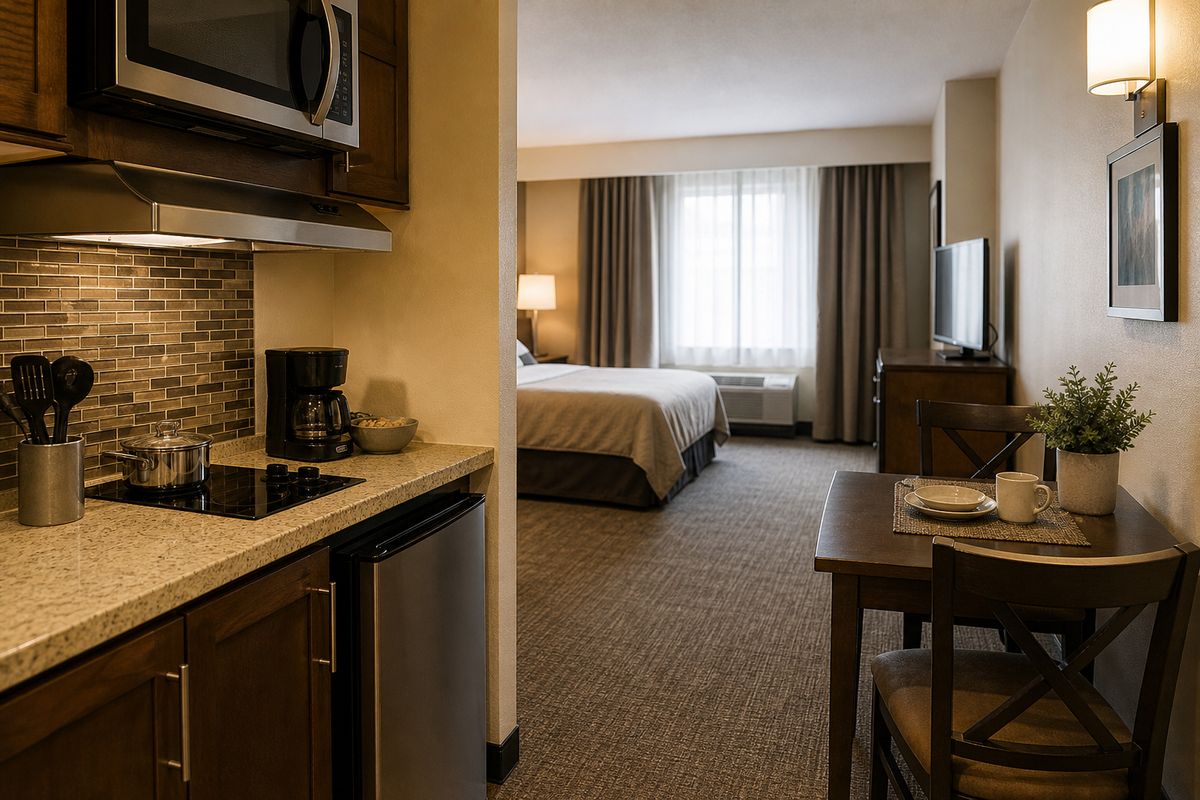
Extended-stay covers purpose-built hotels with kitchenettes and on-site laundry. It also covers conventional motels that have moved, by design or by drift, to weekly and monthly guests. The first group is usually branded and the second usually is not. We look at both.
What they share is length of stay. Fewer check-ins and check-outs mean less housekeeping per occupied room and steadier occupancy, usually at a lower nightly rate.
How long-stay income is underwritten
Occupancy and rate move in opposite directions
A weekly-rate property can run fuller than a nightly one while collecting less per night. RevPAR, which combines the two, is the fairer comparison. The formulas are in how hotel income becomes a price.
The cost side looks different
Rooms are cleaned less often and fewer amenities are supplied, so labor and supplies fall. Utilities, wear on kitchens and appliances, and collection costs tend to rise. A buyer rebuilds the expense picture line by line.
The guest mix matters
A buyer wants to know how much of the revenue is nightly, weekly and monthly, and how concentrated it is. Income from one employer's crews or one agency's placements is good business with a single point of failure, and it is underwritten with that in mind.
Records a buyer asks for on an extended-stay property
- Revenue split by length of stay, or a rent roll for guests staying a month or more
- Average length of stay and a current in-house list, without guest names at the early stage
- A ledger of balances owed by in-house guests
- Rate sheets for nightly, weekly and monthly stays
- Lodging tax filings and how long stays are treated in them
- Any agreements with employers, agencies or relocation companies
- The franchise agreement, if the property is branded
Guest names and personal details are not needed to price a property. They should not be sent before an NDA is in place, and often not until late in due diligence.
Lodging tax and long-term occupancy rules
Two legal questions follow long stays, and both vary by state and locality. One is tax: many jurisdictions treat stays beyond a set number of days differently for lodging tax. The other is status: after a period of continuous occupancy, a guest may gain rights closer to a tenant's, which changes how the stay can be ended.
We are not the source for either answer. A local attorney and your CPA are. What a buyer needs from you is an accurate account of how the property has handled both, because it affects operations after closing and sometimes the price.
Motels that became weekly-rate over time
Plenty of independent motels now earn most of their income from weekly guests without ever having planned to. That is a legitimate business and we evaluate it as one. If that describes your property, the page on independent motel sales covers the ownership and record-keeping side, and this page covers the income side.
Condition after years of long stays
Rooms occupied for months at a time wear differently. Kitchenettes, plumbing and flooring carry the load. A buyer prices the repairs in. Where a property has slipped far enough that it struggles to operate, see hotels that are closed or distressed.
Branded extended-stay
A flagged extended-stay hotel brings the franchisor into the sale. The approval steps are described under franchised hotel sales.

Selling an extended-stay property to us
The path is the same as for any lodging property: a confidential call, an NDA, the numbers, a letter of intent, an agreement, due diligence and closing. Our outline of the sale process takes each in turn. Existing financing is part of the picture too, and if your decision is tied to a maturity date, start with what to do when a hotel loan is coming due.
Timing
We do not quote a closing date in advance. It depends on due diligence, on financing, and on any lender or franchisor approvals.
Questions from extended-stay owners
Do you buy motels that rent rooms by the week?
Yes. Weekly and monthly income is underwritten on its own terms rather than treated as a problem.
Do long-term guests have to leave before a sale?
Not as a condition of talking to us. How in-house guests are handled at closing is addressed in the purchase agreement, and local law governs what either side may do.
What if I do not track revenue by length of stay?
Many owners do not. Registration records and the property management system can usually be used to reconstruct it. Other common questions are answered in the seller FAQ.
Start with a confidential conversation
Tell us where the property is, how many keys it has and whether it carries a brand. We read every submission ourselves and call you back at the number you give.
Nothing you send is passed to a listing service, and sending it does not commit you to anything.
Tell us about the property
Read by the buyers. Never listed, never advertised.